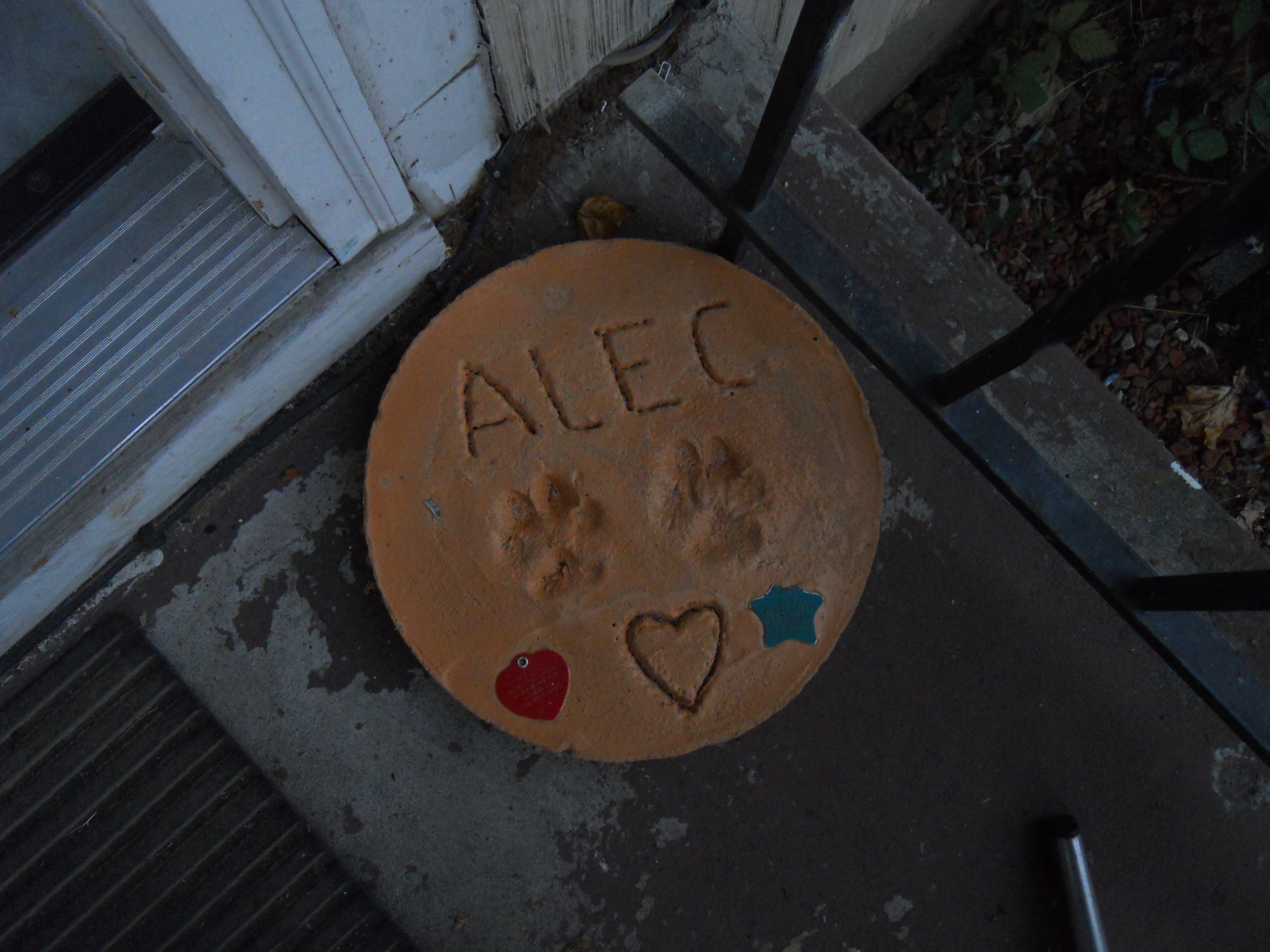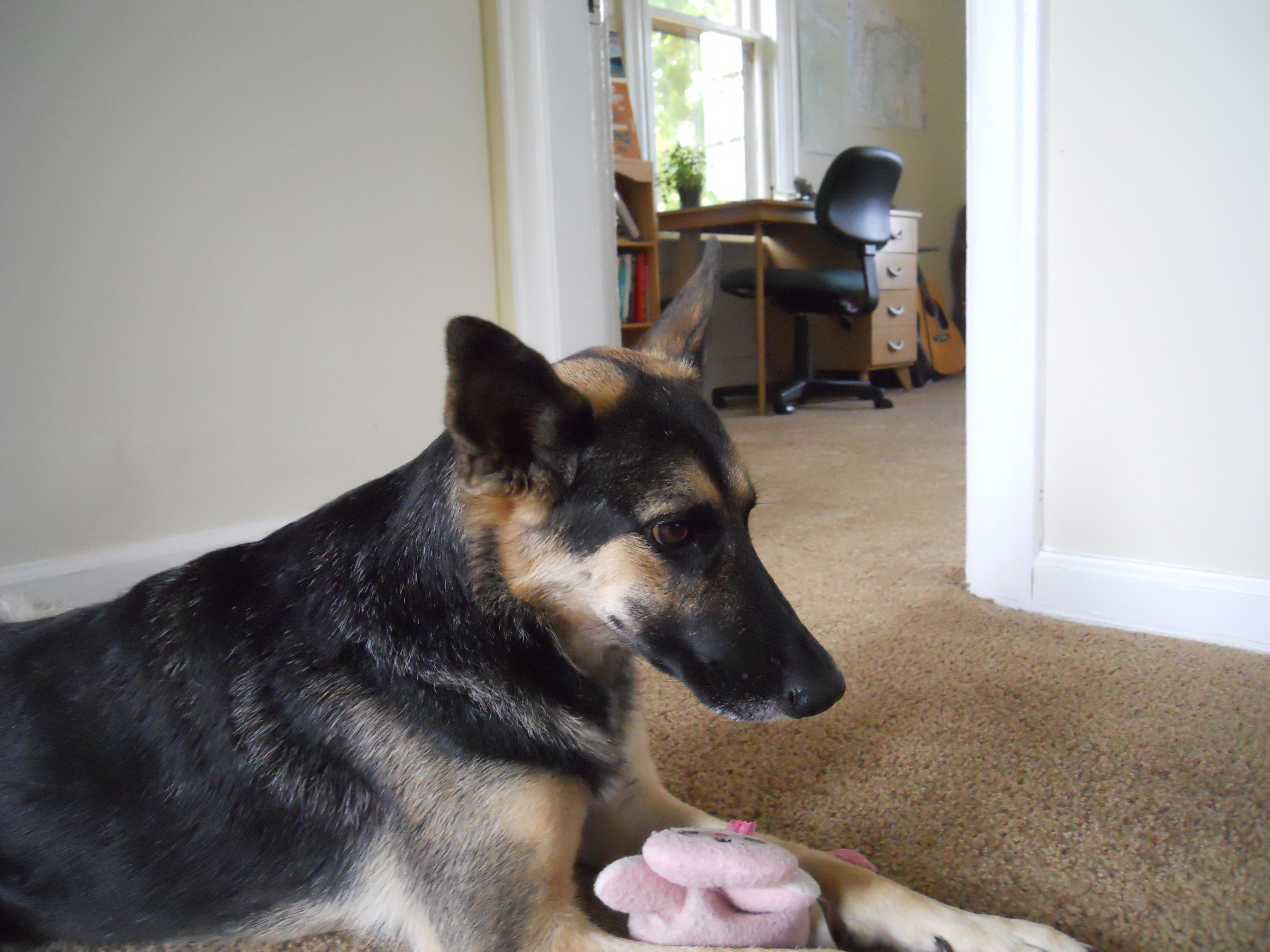

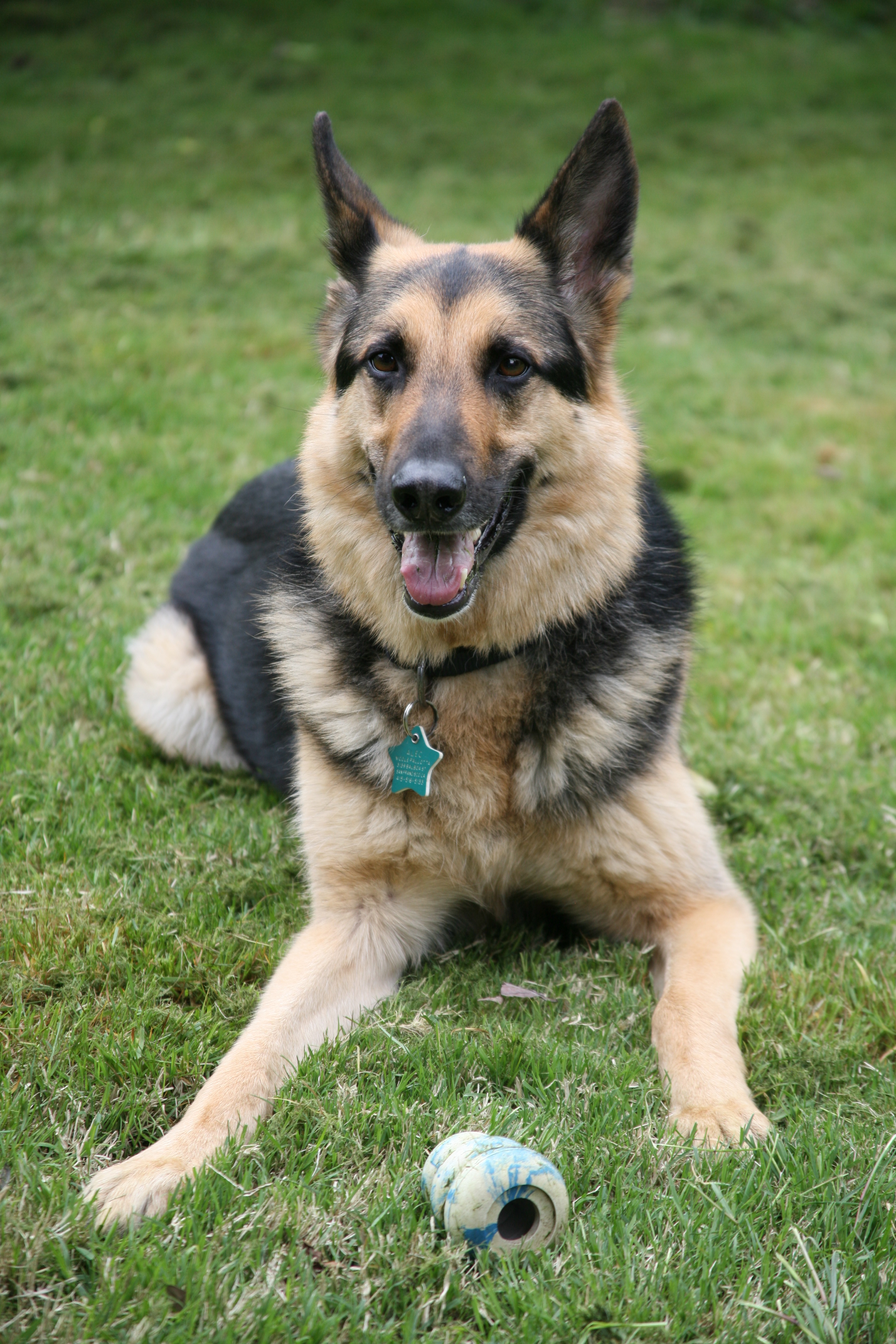
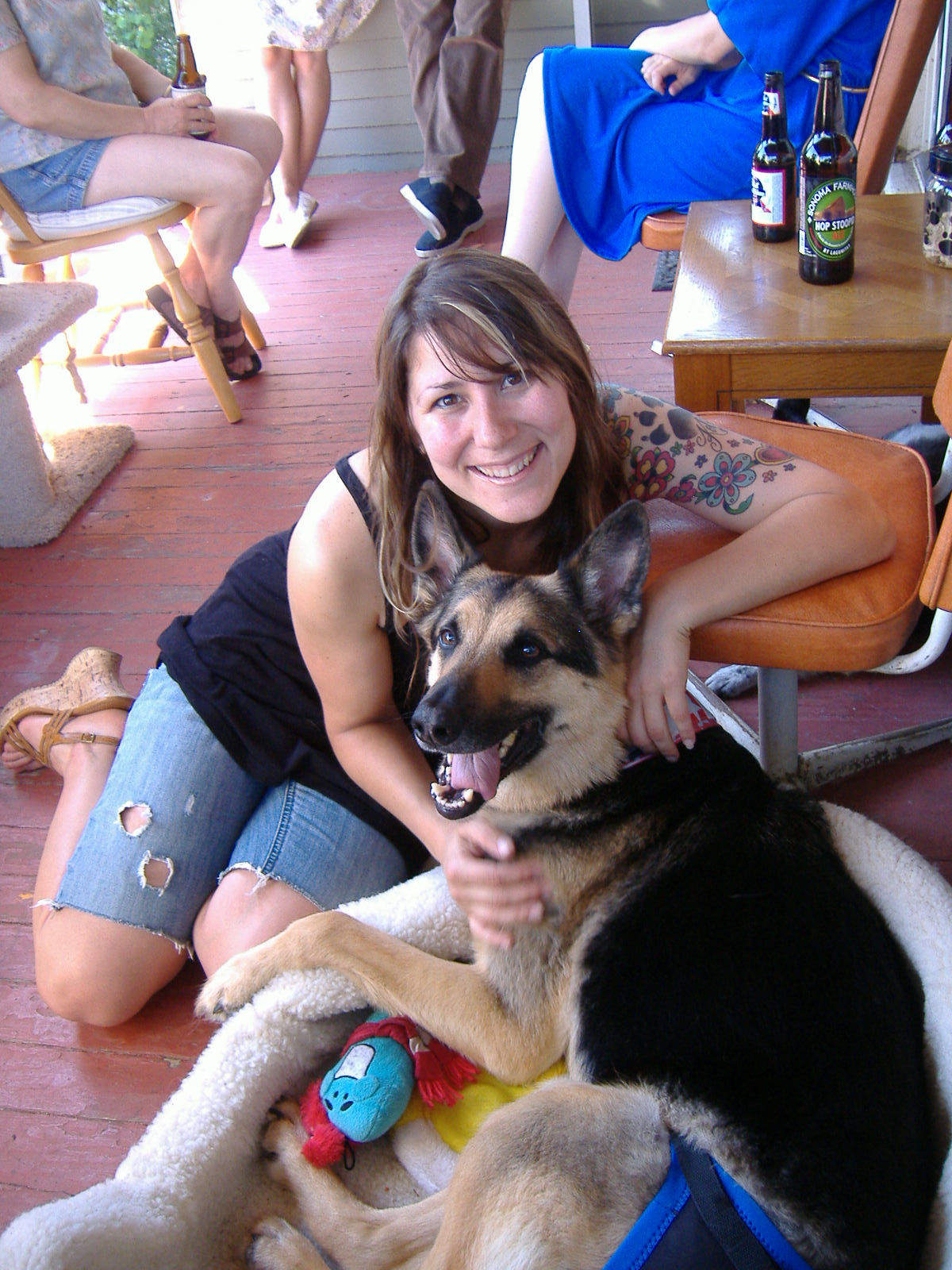
This is for everyone who has deeply loved and lost a companion animal. This is not an exhaustive list by any means. It is just a collection of a few things I found helpful as I struggled with my own intense grief after losing my beloved German shepherd Alec in the summer of 2010. If you are bereaved, I hope you will find something here you can use. If you have ever lost a special animal friend, feel free to share your tips for what helped or comforted you. I would love to read them! I can honestly say it felt like nothing helped during the first 6-8 months, but looking back some things were more healing than others. Maybe one day I will make an alternative list, “Destructive things you should not do after losing an animal friend!” But for now we’ll stick with the positive. In no particular order, here goes:
1. Run! Or kick box or cycle or climb or swim or dance – only do something physical. You may need to take a break from things you love because they won’t feel the same. Now is a great time to try something new. I used to love singing and dancing. Not for an audience, mind you! Just for fun, around the house, in the car (just the singing)…but I did it a lot. So much I didn’t even think about how many times a day I would burst into song and/or pop off some silly dance moves. But I noticed it when I stopped. I lost all desire to dance, to sing, to listen to music even (and I LOVE music). These things came back of course, but that’s just to say you may not feel the desire for your most loved activity while you are grieving. Or you may want to throw yourself into it. Everyone’s different, but the universal point here is exercising the body, even though you may not want to get out of bed, is very helpful for your mental and emotional state. I know it’s difficult to get started when you’re feeling depressed, but it’s almost impossible not to feel a little better after some physical activity.
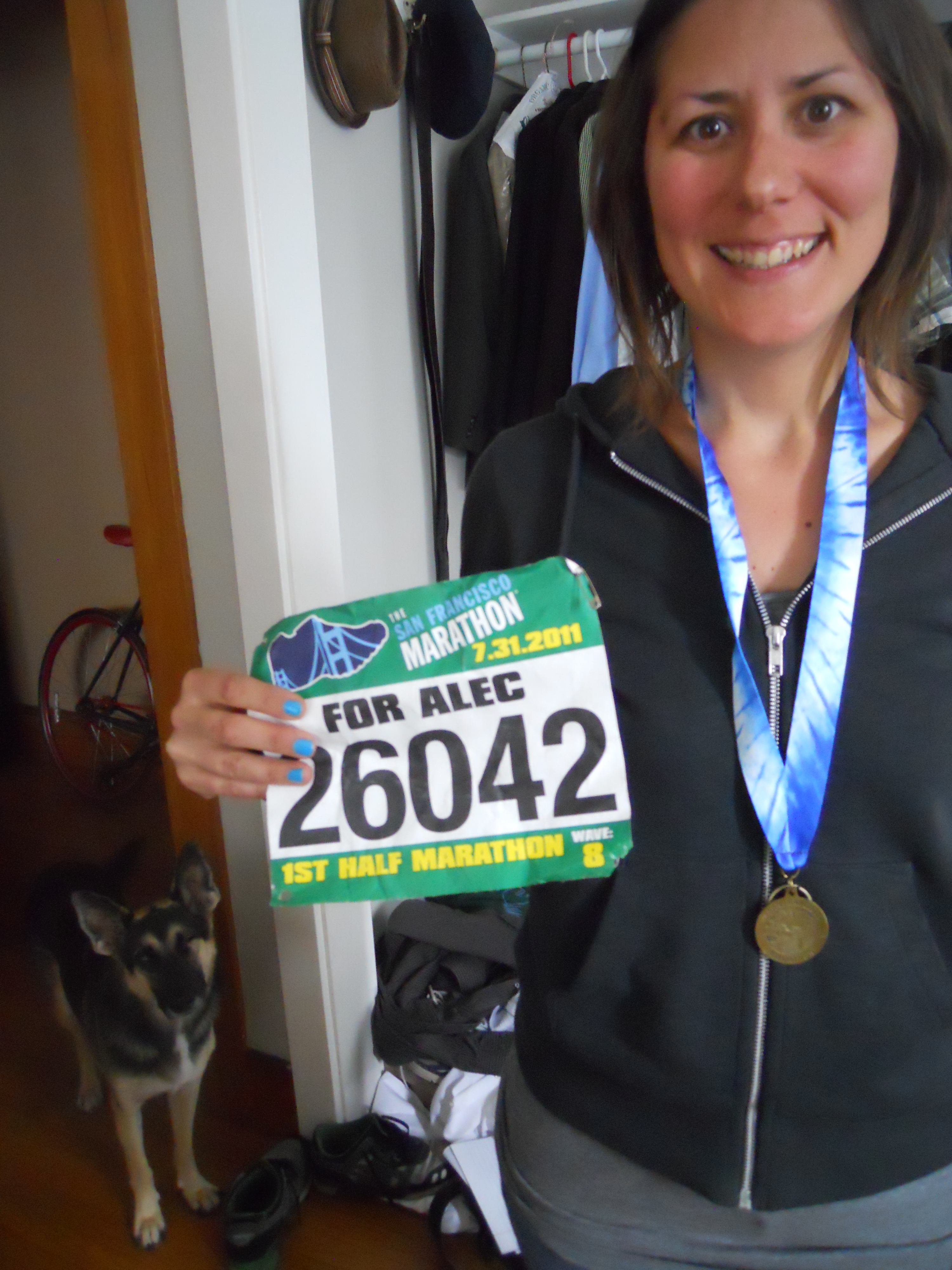
For my part, I decided to train for a half marathon about nine months after Alec died. I was not much of a runner so this was a big deal for me. Sticking to a training schedule was a good counterpoint to the disorganizing effects of grief; it gave me something healthy to do when I felt lost and scattered. It kept my body tired and my mind focused on something constructive. The race also took place on the one-year anniversary of Alec’s death, so it gave me a positive goal for this significant day – I would run for him.
Although the training was a good distraction, I was extremely nervous when race day came. But this anxiety served a purpose too; it helped keep my mind from dwelling on what I was doing at this time last year: saying good-bye to my best friend. Without this race to preoccupy me, I would have been in a very bad place that day. My only goal was to finish, and when I actually did that (remarkably, way under the cut-off time where they sweep you onto the sidewalk) and got my little finisher medal, I was so exhilarated and exhausted that the day passed without me having a meltdown. Mission accomplished.
2. Hike . Or sit near a river, rest on a mountaintop, doze in a garden, stroll along the ocean, or take a walk in the park…just get outside and clear your head. I know hiking is physical, but for me it was qualitatively different from training for the half marathon. To me, hiking is quieter and more contemplative, and the important point I am trying to stress here is to just be in nature as much as possible. I have always loved hiking, so I was no stranger to it, but it became my go-to “keep myself busy” activity after Alec died. I went whenever I could. But I had always had dogs with me before and it was a completely new experience to go hiking utterly alone (kind of scary too, just being honest! but I stuck to popular trails). My brain was so busy after Alec died. It would just chatter and chatter away. It would do this while I was hiking too, but I noticed the farther I hiked eventually…it would…just…stop. And my head would be quiet. During these times I would frequently have flashes of insight or comforting thoughts or other epiphanies. Sometimes it felt like I could talk to Alec in my head. I would have conversations with him, and while I am pretty sure it was just my mind talking back, what is this thing we call “mind” anyway? Either way, they were comforting thoughts that would eventually bust through the sad, mad, confused chatter and that’s all that mattered.
For some reason I needed to be moving through the woods, by myself, for this to happen. I think sitting by a river or on a mountain or in a garden or a park would also be good for quieting your mind and letting the comforting epiphanies rush in. But I am not good at sitting still and I even think better when I’m in motion, so hiking was perfect for me. Plus after hiking 14 miles you are going to be tired enough to fall asleep, which is a bonus if you are having trouble with that.
3. Memento Mori. Remember your mortality. Death comes for us and everyone we love, and we don’t get to choose when. This is not meant to be depressing but rather to remind you that death is a normal part of life and nobody is exempt. The positive spin on this is it should help us to remember to live and love to the fullest, to make the most of our days and nights while we have them. This means different things for everyone, but surely one thing we can all agree brings meaning to our lives is love, not only to be loved but also the incomparable joy that arises from loving another unconditionally – and showing them this every day through our actions.
Also, if you have been blaming yourself in some way for your loved one’s death, stop. You are only human and I’m sure you did the best you could.
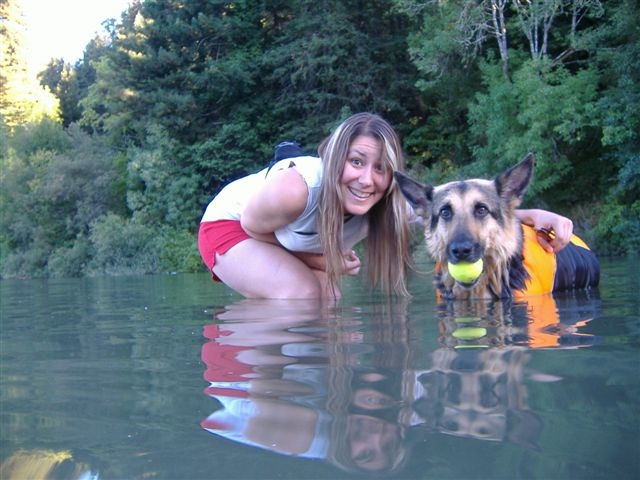 4. Remember the good times. If losing your friend was traumatic for you – as it was for me – trust me, the disturbing images, whatever haunts you most, will eventually quiet down. This sounds cliché but while you may never stop missing their presence, and you may never be okay with the circumstances surrounding their death, I promise you will get to a place where you can laugh and smile again when you think of them. I honestly wasn’t sure I would, so if you have doubts about that, I understand. In the early stages of grief it hurts even to think of the good times, at least it did for me. If you get comfort from these happy memories right away, you are probably more evolved than me. I admit I am an extreme case, which is why I am writing this…for the people who are really struggling. I have been there. It will get better.
5. Get out of Dodge. When Alec was here it was not easy for me to travel. He had special needs the last two years of his life (unrelated to the cancer that would kill him), and when he became sick I really couldn’t leave. After he died, I found myself in the strange position of having a lot of time and freedom on my hands. I was so used to caring for Alec and scheduling my life around him (happily, I always feel compelled to add, because I loved him beyond measure and was devoted to his well-being; I never thought of him as a burden), I didn’t know what to do with all this time. Right after he died, I hopped a plane back east and stayed with my best friend for two weeks that turned into a month because I couldn’t face going back. I realize not everyone can do that, but you may have options. I was single and it had just been me and Alec for a long time, so I didn’t have a family to stick around for. Alec was my family, and when he was gone I felt rootless. When I got back to Portland, I moved out of the apartment we shared. It just didn’t feel like home anymore. But I was glad I spent that month in New Jersey, crying on my best friend’s couch.
I also have a friend in Germany I had always wanted to visit, and a few months later I booked the flight. This trip abroad was an important turning point in my healing process. Travel is what you make of it, but it can definitely help clear out the metaphysical cobwebs and give you a new perspective.
By the way, I am talking about temporary travel – avoid big decisions like relocating or quitting your job while grieving. It’s just not the best time to make a major decision. Although I moved out of my apartment and don’t regret it, I stayed in the same city.
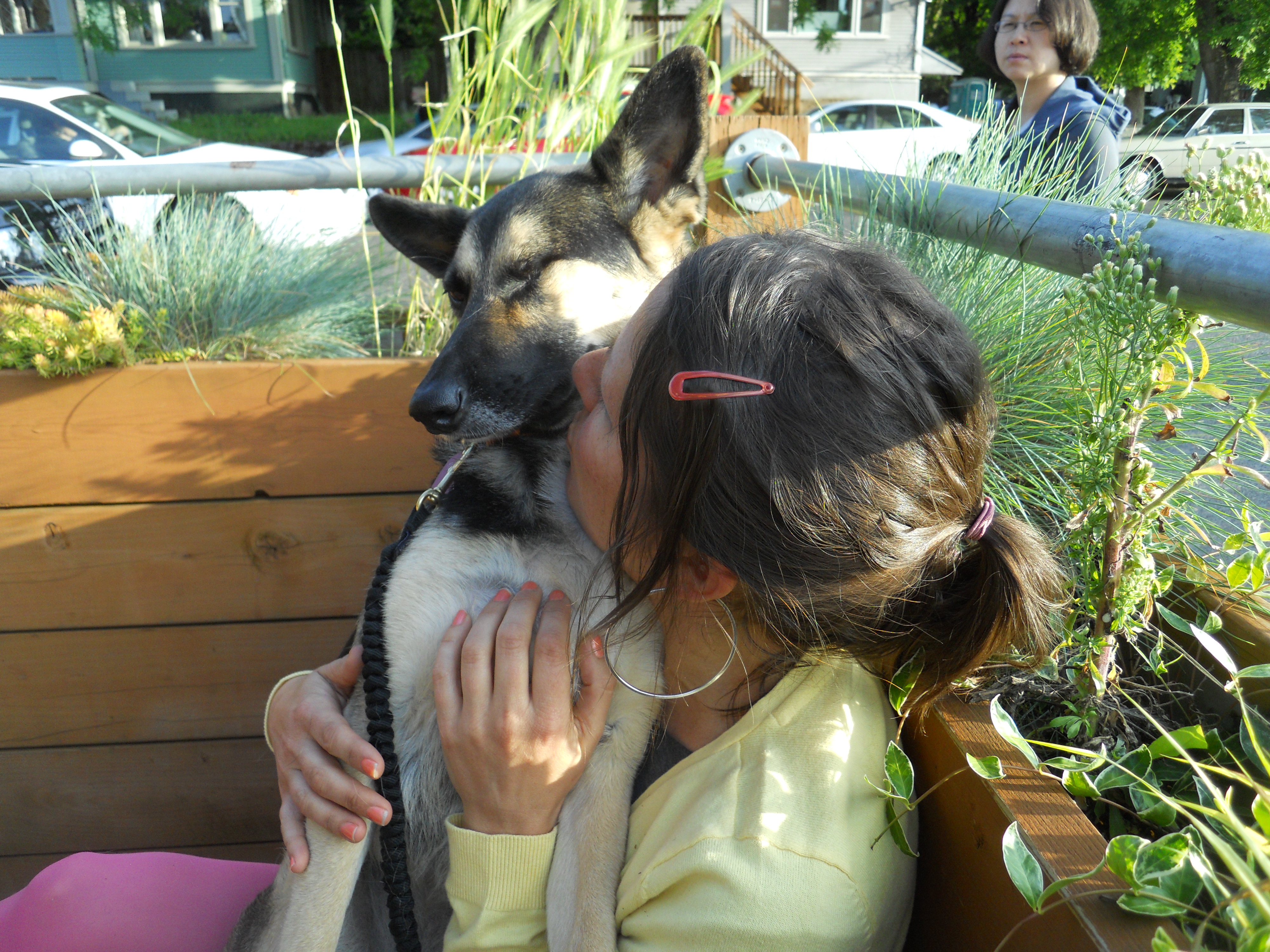
6. Love again. Adopt another animal. Some say the best way to honor the life and memory of a dear companion is to save the life of another. I can’t dispute that. Although I vowed I would never adopt again after Alec died, I started to realize how much I still had left to give another animal. And although I could not make a dent in the problem of pet overpopulation, I could make a very big difference in the life of one animal. It goes without saying Alec could never be replaced, but with no one to take care of there was a big, gaping hole in my life. I am so glad I adopted my dear sweet Teagan, who was recently ALDF’s mascot for National Justice for Animals Week due to the abuse and neglect she suffered before being rescued. Teagan came to live with me almost exactly one year after Alec died. She has been with me nine months now and has done more for my healing process than anything on this list by far.
I have approximately a million photos of Teagan here.
7. Talk, talk, talk. Or write, write, write. Just as you need a healthy physical outlet, you need an emotional outlet too. You need to get the thoughts out of your head. Don’t be afraid to ask for help. Sometimes even close friends don’t know what to say around the bereaved and you may feel like people are avoiding you. It is common for people to avoid bringing up your loved one, and if you do it they may change the subject, trying to steer you away from painful thoughts, worried you will start crying and not realizing that it is healthy, normal, and necessary for you talk about your loved one. It is part of the processing you need to do – processing what happened, and that they are no longer here. Assimilating the loss doesn’t happen all at once. It happens in small steps. People mean well, so just try to clearly communicate your needs. Tell them that it really helps and you actually feel better after talking (even if you end up crying, which you probably will – but you also will feel better. It bears repeating: tears are necessary and healthy!).
My friend Mike was on the receiving end of plenty of tears (I know how much guys love that! He squelched his instinct to run away most of the time, and for that I am grateful)…

…so was my best friend Kristine, who opened her home and heart to me in a million big and small ways. I was (and am!) very fortunate to have her unwavering support.
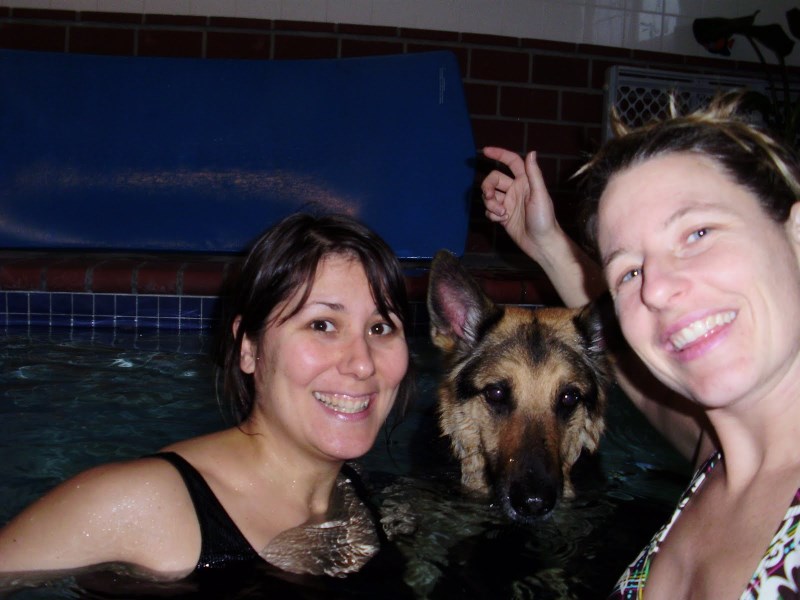
You may want to visit a pet loss support group if you feel unsupported or alone. Many veterinary specialty hospitals now hold ongoing free groups that meet a couple times a month or sometimes weekly, and you can take advantage of these to meet like-minded people who will understand some of what you are going through. It is immensely important you feel understood. There is nothing wrong with you for feeling this loss so deeply. He or she wasn’t “just an animal,” despite what some thoughtless people might say.
Writing is a good emotional outlet, too – anything that gets the thoughts and emotions out of your head for awhile. You may feel you have nothing to say but when you put pen to journal you might be surprised at what comes pouring out. Give it a try. You might even end up with a blog!
8. Read. It helped me so much when I thought I was going crazy to know that I was not alone, that other people had stood where I had stood and they had gotten through it (notice I did not say “over” it). I read pretty much every book on grief out there, and I have some favorites that were immensely helpful. I definitely took refuge, or looked for it anyway, in books, in shared experiences, as I tried to extract meaning from my own experience.
A few words about books on grief generally (i.e. grief over a person) versus those specifically about pet loss: If legitimizing your grief is an issue, then the latter may be especially helpful for you These books go a long way toward explaining why you may feel alone in your grief or as if no one understands, because bereavement over a companion animal is not considered as socially acceptable as grief over a human friend or family member. This is changing for sure, but depending on your work environment and the level of understanding among your family and friends, you may feel isolated, which will only exacerbate your grief. If, on the other hand, you have a supportive social network, as I was lucky enough to have – I can’t imagine a more supportive workplace than ALDF – or if your relationship with your companion animal was especially profound and deep, you may get more out of reading books about the loss of a child, best friend, or partner.
These were some of the ones that helped me most; none of them are animal-specific:

- Transcending Loss: Understanding the Lifelong Impact of Grief and How to Make it Meaningful
- Grieving Mindfully: A Compassionate and Spiritual Guide to Coping with Loss
- I Wasn’t Read to Say Goodbye: Surviving, Coping and Healing After the Death of a Loved One
9. Create. I pretty much failed at creating any kind of artsy crafty memorial, I think in part due to my unwillingness to let him go, and also just because I moved through my grief at a proverbial snail’s pace, examining every stone on the path, really taking my time, which has seemed to work for me…and partially due to the fact that I am perhaps the least crafty person on the planet. But I did do a collage and meditation activity that was extremely therapeutic for me. I also have a blog (obviously), which fits under the “writing” tip above, but it also serves as a memorial of sorts, and it really is a creative process for me as I also include photos, links to songs, passages from novels, etc. So it has become a memorial space in itself. And it just goes to show your memorial can be whatever you want it to be.
The bottom line is it can be very therapeutic to work on a memorial to honor your friend, whether it is a slideshow, memory scrapbook, poem, or other kind of art. The emergency animal hospital in my city has Memorial Art Therapy Workshops where you can craft a bookmark, prayer candle, fused glass keepsake, paperweight, memory box, or picture frame in honor of your companion animal. I loved the idea of memorial art therapy, but when I finally tried one of these workshops I cried the whole time and then ran away (and that was my second attempt! The first time I sat in the parking lot crying and never made it inside). I was not ready. Plus I think it was not the right outlet or environment for me. But try some things out – you will find something that feels right for you and it will be as constructive as training for a marathon (or even just half of one).
10. Don’t expect to ever get over it. Now, you might “get over it”- and that’s fine. But some people experience such a profound connection with their animal friend that they will never, ever stop missing them. What you will do is learn to live with it. You will integrate the loss into your life, and you will find a way to make it meaningful. You will think of all the ways your unique relationship, and the pure unconditional love you felt for your dear companion, changed you for the better. And you will nurture these good parts. In doing this you will honor your friend for the rest of your days. And in doing this they will never really leave you because you are not the same person you used to be. They changed you and therefore are a real part of you – that part we call the “self” or identity. And they can continue to inspire you. Your love is beautiful and it is not gone just because their physical presence is. In fact, you may find as you move through your grief process that your love for your departed friend grows even bigger, and you will realize that although they are gone your love never will be. And you can fill their absence with more love. You will find a way. It’s okay if it takes time. Grief knows no schedule. It is a part of life just like love and death. So be gentle with yourself and take your time.
Finally, you are awesome for loving your animal companion that much. I wish everyone did. Thank you.

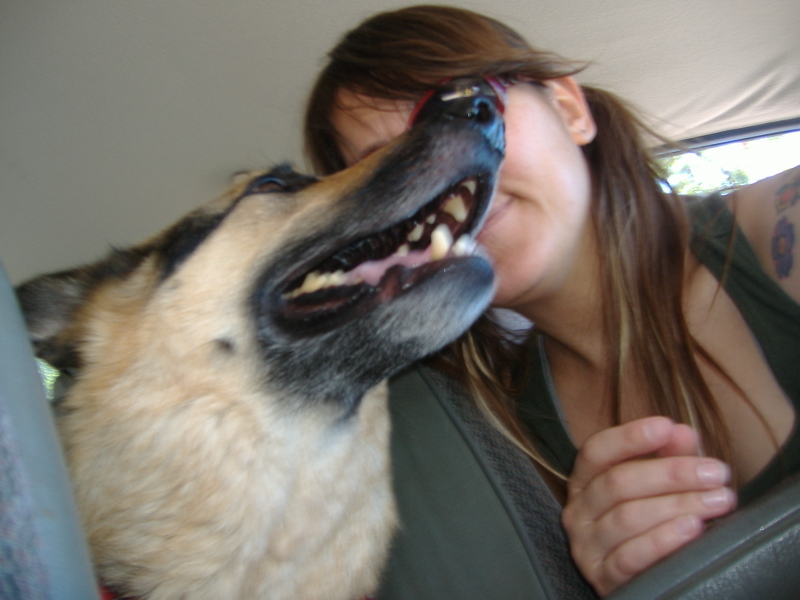




 Around this time, as I was lying in bed trying to fall sleep, an image popped into my mind of the soft wispy fur on Alec’s chest between his front shoulders, how it felt, the way I liked to press my cheek against it. Random. I snapped on the light and jotted it down in my notebook (always this faith that words will save me).






 “Grief is the price you pay for love.” Well I hated that one after Alec died, I really did. I know some people find this a comforting thought, and I understand how it could be. And it is certainly true. It just didn’t resonate with me in the beginning. It felt flippant; it didn’t seem to capture everything Alec and I had been through together, how unfair it felt to lose him that way. What did bring me a modicum of comfort (and I use that word, comfort, very loosely, as it was almost impossible for me to come by anything resembling comfort for a long time after he died – if anyone out there is in that dark scary place where I was, I’m sorry; trust me it does get better; I didn’t think it would either) was the knowledge that
  I was talking to my friend not long ago about Alec, and I said that we exist outside of time now. Something like that. It just popped out of my mouth but I paused on it, considering what it meant, wondering why I said it. My perceptive friend heard me slip into ponder mode and said, “Hmm, I sense a future blog post.” Well I have not written about it until now, but I have thought about the idea of time a lot in the aftermath of Alec’s death. The tie-in here is the question of the photos, of being a weirdo who cannot create a slideshow of her dead dog until more than a year later. But, really, what is the rush? I always say people should not bury their grief deep inside, no matter how temporarily compelling it may be as a short-term survival strategy, because it can come back worse later. But I have been writing, I have been crying, I have been thinking, I have been talking. The pictures are tough for me though. And I think it’s because of the time thing. This is hard. Sometimes the particulars of grief are so clear in my mind yet difficult to write about. It’s like I keep Alec in my pocket, hold him close, can bring him out when I need …okay it’s like, you know how your favorite song can take on a wallpaper quality if you listen to it too much? I have always been the sort who when I fall really in love with a song or album, I have to limit myself in how much I listen to it because I don’t want it to lose that special magical quality and deep emotional resonance. I don’t want to wear it out. Not everyone does this. And I don’t do this with *every* song I love, just those really special songs by my favorite bands that I have some kind of weird connection with –an entire album like this for me is
  Because not everyone feels this way about their companion animals, it is even more important for us to share our stories. Many of us know what it is like not only to open our hearts and truly love a member of another species, but to enact that love with a commitment to the animal and his or her needs (I have personally always found the action part of the verb “love” to be more important than the more passive, feeling part). An animal doesn’t care that you say you love her – show her! Take her for a walk, include her in your life, be HER best friend! At ALDF we often say the law regarding companion animals has not caught up to changing social norms. The notion that animals are mere property is antiquated and has not kept pace with our changing perception of pets as family members. This is true, especially if you hang out in places like the
  A year ago I could not imagine adopting another dog. Yet here I am, head over heels in love with a sweet little one-eyed German shepherd. I’m back in a dog-centric routine, trying every day to make someone happy again…walks, adventures, trips to the park, rides in the car, simple companionship. Teagan is so different from Alec, but she makes me feel close to him because of the joy she has brought back into my life. We have been together three months now. She is amazing and I love her. (To see some pictures of Teagan in her new home with me, you can visit